

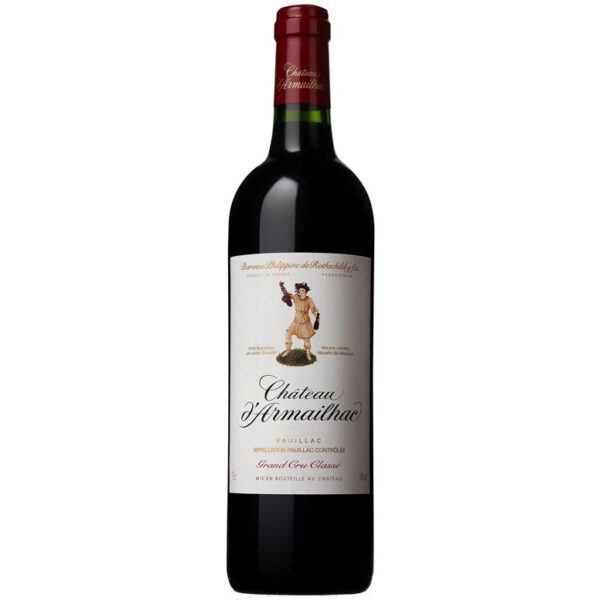
Key characteristics:
Château D’Armailhac, Pauillac Grand Cru Classé is a distinguished Fifth Growth from the renowned 1855 Bordeaux Wine Official Classification, celebrated for its elegant classicism and quintessential Pauillac character. This prestigious estate, owned by the esteemed Rothschild family, shares its exceptional terroir with neighbors like Château Mouton Rothschild and Château Pontet Canet. It stands out for its unique blend, featuring a significant proportion of Cabernet Franc from some of the Médoc’s oldest vines, some dating back to 1890. Château D’Armailhac offers remarkable value, embodying the power, refinement, and aromatic complexity expected from a Grand Cru Classé.
Tasting Notes:
- Variety: 60% Cabernet Sauvignon, 29% Merlot, 9% Cabernet Franc, 2% Petit Verdot
- Appearance: The wine is a garnet red with a crimson tint.
- Aroma: The highly expressive nose is remarkable for its intense and radiant red fruit aromas mingled with notes of roasted coffee and marzipan.
- Taste: The ample and full-bodied attack reveals a well-rounded, silky tannic structure, giving an impression of richness, underlined by a generous and varied range of flavours such as cherry, vanilla and liquorice. The long finish is sustained by hints of chocolate.
- Region: Pauillac, France. Situated in the heart of Pauillac, the vineyard spans over 80 hectares across four gravel banks, offering a mosaic of deep gravel, clay, and clay-limestone soils. This diverse terroir, including the clay-rich Obélisque bank ideal for Cabernet Sauvignon, contributes to the wine’s depth and structure, characteristic of the powerful and concentrated reds of Pauillac.
- Pairing: Grilled or roasted red meats and hard cheese are the ideal match.
Overall impression:
This wine consistently delivers an elegant classicism, offering a harmonious balance of power, refinement, and aromatic complexity. It is a true reflection of its Pauillac origins, promising a deeply satisfying and memorable tasting experience.
Extra notes:
- Château d’Armailhac was among the first estates known to actively plant Cabernet Sauvignon, with Armand d’Armailhacq championing its spread in the Médoc.
- The château building itself is famously only half-finished, a unique architectural feature resulting from construction halting in the 1820s due to lack of funds.

Reviews
There are no reviews yet.