

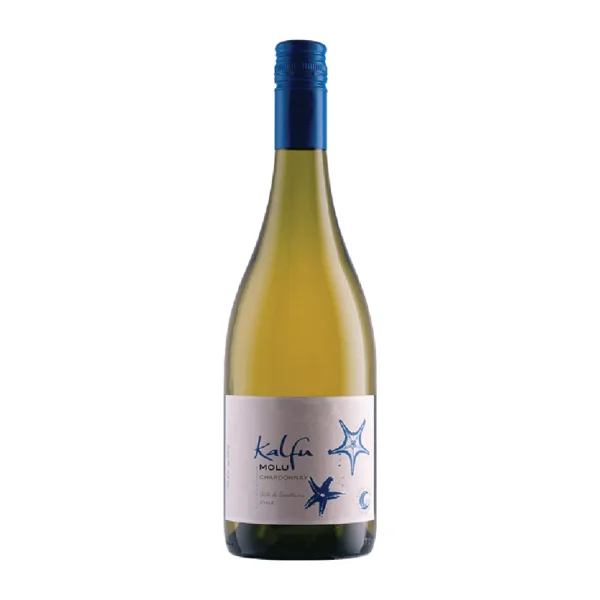
Key characteristics:
Kalfu Molu Chardonnay is an elegant and expressive wine, renowned for its vibrant tropical fruit aromas and a beautifully balanced palate that is both concentrated and fresh. Hailing from Chile’s celebrated cool-climate Casablanca Valley, this Chardonnay benefits from the region’s unique terroir, where morning mists and the Pacific Ocean’s influence moderate temperatures, allowing for a prolonged ripening period that enhances complexity and retains a refreshing acidity. The wine’s distinctive character is further shaped by a period of aging on its lees, which imparts a delightful breadth and creamy texture, complemented by a subtle touch of French oak.
Tasting Notes:
- Variety: 100% Chardonnay
- Appearance: Straw-colored yellow.
- Aroma: With good tipicity it brings aromas of pineapple, papaya and mango, complemented with gentle notes of vanilla and dry fruits.
- Taste: A well-rounded wine with good volume, a concentrated palate but fresh at the same time where vanilla and tropical fruit flavors intermingle. Long and clean finish.
- Region: Casablanca Valley, Chile. This cool-climate region is celebrated for its vineyards that benefit from cooling coastal breezes and morning mists, ensuring a longer ripening period that contributes to the wine’s fresh acidity and aromatic intensity.
- Pairing: Ideal to accompany fatty fish, pasta and white meats.
Overall impression:
This Chardonnay offers a very pleasing experience, expertly blending ripe fruit characteristics with a refreshing openness, culminating in a stylish and dry finish. It stands as an excellent all-rounder, delivering remarkable generosity and richness for its category.
Extra notes:
- The name “Kalfu” means “blue” in Mapudungun, the language of the indigenous Mapuche people, symbolizing the deep blue of the Pacific Ocean and the expansive skies. “Molu” translates to “where the sun sets,” referring to an ancient Mapuche belief that stars would hide in the sea at dusk.
- Approximately 15% of the Kalfu Molu Chardonnay is aged in French oak for six months, while the wine also benefits from four to six months on its lees, a process that contributes significantly to its creamy texture and overall complexity.




Reviews
There are no reviews yet.