

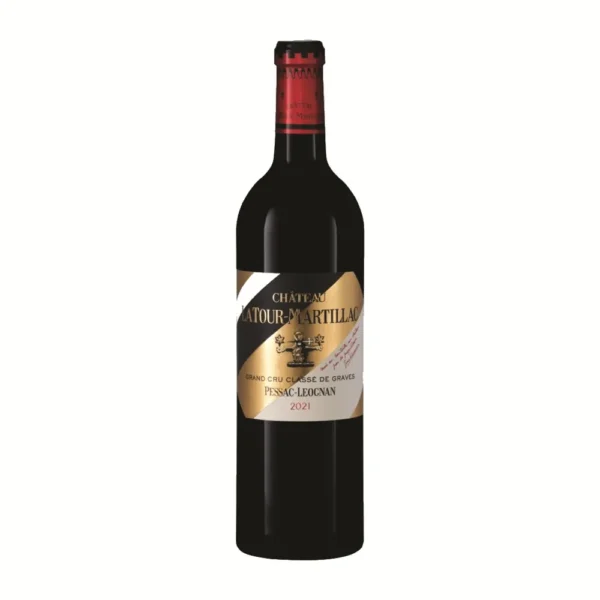
Key characteristics:
Château Latour-Martillac, Grand Cru Classé de Graves Pessac-Leognan is an emblematic Bordeaux wine, celebrated for its elegant structure, harmony, and aromatic intensity. This esteemed estate, a Classified Growth for both its red and white wines since the 1953 Classification of Graves, draws its name from a 12th-century tower, a remnant of a fortress built by the ancestors of Montesquieu. It stands out for its commitment to quality over yield, meticulously crafting wines that reflect the authentic Graves terroir.
Tasting Notes:
- Variety: 60% Cabernet Sauvignon, 30% Merlot, 10% Petit Verdot
- Appearance: Deep purple color
- Aroma: The wine reveals an attractive nose with intense aromas of fresh black fruits (blackcurrant, blackberry, black cherry) with a touch of menthol and hints of spices brought by the Petit-Verdot.
- Taste: In the mouth, the attack is expressive and silky. The fruit is beautifully fresh, acidity is well balanced by fine and elegant tannins. The finish is complex and pleasantly long.
- Region: Pessac-Léognan, located in the northern part of the Graves region of Bordeaux, is renowned for its exceptional terroir. The vineyards feature a mosaic of gravelly soils, rolled pebbles, flint, and various small stones, enriched with clay and sand, providing excellent natural drainage and encouraging deep root development. This unique environment, influenced by the nearby ocean and protected by the Landes forest, yields wines of remarkable complexity and aging potential.
- Pairing: Pairs well with grilled duck breast, roast beef, venison, and aged cheeses.
Overall impression:
This Château Latour-Martillac offers a refined and complex experience, showcasing a beautiful balance of fresh fruit, elegant tannins, and a long, satisfying finish. It is a wine of character that truly embodies the excellence of the Pessac-Léognan appellation.
Extra notes:
- Château Latour-Martillac is one of only six properties classified for both red and white wines in the 1953 Classification of Graves.
- The 1934 red wine was notably selected for the coronation celebration of King George VI in 1936, highlighting its early recognition for exceptional quality. The distinctive “gold and sandy stripes” label, inspired by the Art Deco movement, was designed by Alfred and Jean Kressmann in the 1930s and still proudly adorns the bottles today.


Reviews
There are no reviews yet.